
You are using an out of date browser. It may not display this or other websites correctly.
You should upgrade or use an alternative browser.
You should upgrade or use an alternative browser.
LAC Vol.1 Dance Your Cares Away/Fraggle/Law Abiding Citizens
- Thread starter Bryan74b
- Start date
Law Abiding Citizens volume 1.
- Status
- Not open for further replies.


Best be. Cause we did what others wouldn't and now you're in control.


The EU economy is tanking. Nordstream provided cheap gas. The Green Party is destroying Europe.Ukraine thinks Putin is the Center of Gravity, and if they kill him the war ends. NotKitssss sure if true, but you don't sit at the negotiation table and try and kill the other nations leader.
War will give them an out. They want Russia's resources.

It's not our timeline. Patience will pay off.
Longtime Democrat George Clooney and His Family Ditch America, Move to France, and Secure French Citizenship
- Hollywood elitist and longtime Democrat activist George Clooney has officially joined the growing list of wealthy, left-wing celebrities who preach “American values” while quietly distancing themselves from the United States.
- Clooney, along with his wife, Amal Alamuddin Clooney, and their two children, has reportedly obtained French citizenship through a naturalization decree.
- The couple’s 8-year-old twins, Ella and Alexander, were included in the process.
- Clooney went on to explain that he feared raising his children in Los Angeles.
“I was worried about raising our kids in L. A., in the culture of Hollywood. I felt like they were never going to get a fair shake at life. France—they kind of don’t give a shit about fame. I don’t want them to be walking around worried about paparazzi. I don’t want them being compared to somebody else’s famous kids.”
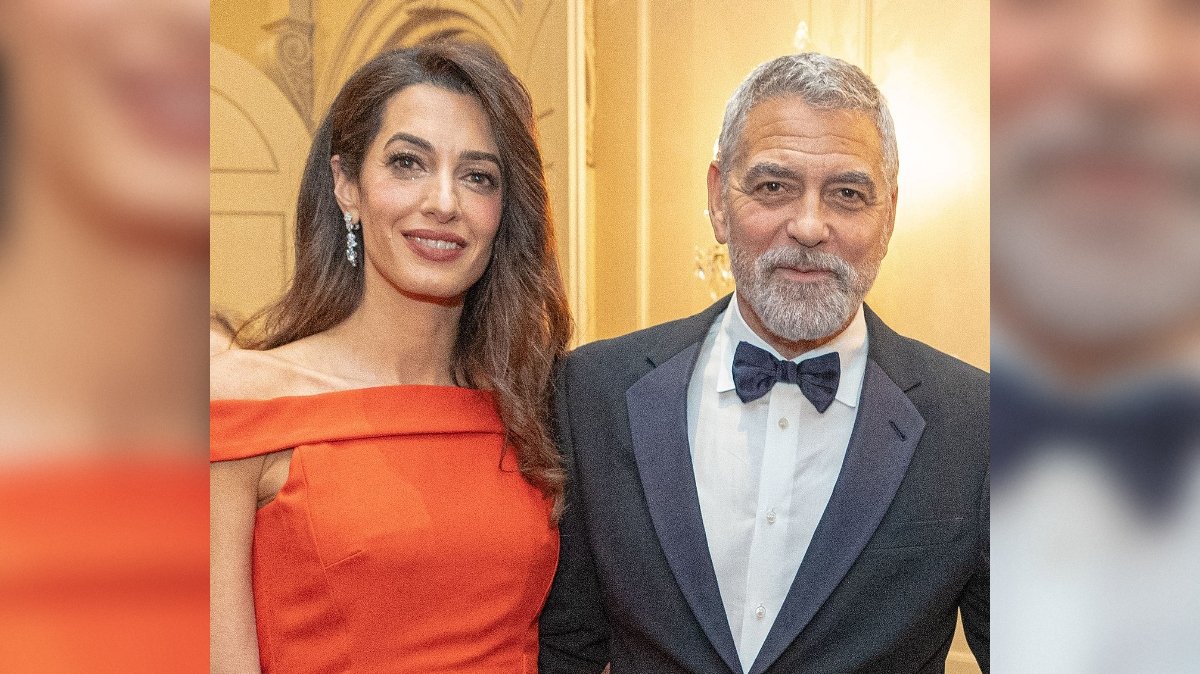
Longtime Democrat George Clooney and His Family Ditch America, Move to France, and Secure French Citizenship | The Gateway Pundit | by Jim Hᴏft
Hollywood elitist and longtime Democrat activist George Clooney has officially joined the growing list of wealthy, left-wing celebrities who preach “American values” while quietly distancing themselves from the United States.
 www.thegatewaypundit.com
POLITICAL VIOLENCE: The letter from Vince Luther Boelter, the assassin appointed to public office by Gov Tim Walz, to FBI Director has been released:
Dear Kash Patel,
My name is Dr. Vince Luther Boelter Ed.D. I am the shooter at large in Minnesota involved in the [illegible] shootings the morning of Saturday June 13th at approximately 2:30am and 3:30am, in around [unclear] that I will probably be dead by the time you read this letter.
I wanted to share some info with you that you might find interesting. I was trained by U.S. Military people off the books starting in college. I have been on projects since that time in Eastern Europe, North America, the Middle East, and Africa. All in the line of duty what I thought was right and in the best interest of the United States.
Recently I was approached about a project that Tim Walz wanted done, and Keith [unclear] was also aware of the project. Tim wanted me to kill Amy Klobuchar and Tina [unclear]. Tim wants to be a senator and he doesn’t trust [unclear] to retire as planned and this is meant to stay in the last mile with Amy & [unclear] gone. Tim would get one of the open senate seats, and [unclear] was to be VP, and Keith Ellison would be rewarded with a lucrative governing position.
I told Tim I wanted nothing to do with it and that I didn’t call off that plan I would go public. He said he would call it off himself if I didn’t play ball. Then he set up a meeting with me and [unclear] and [unclear] to take care of me when I refused.
They had some people waiting to kill me. I was able to get away by God’s mercy. So I went back a short time later and shot back at [unclear].
You should notice how I didn’t fire me rounds at any police officers and by God I have plenty of opportunity. Ask for the report on how many weapons and ammunition I had with me.
Cops were pulling up right next to me in unmarked vehicles and I had an AK pistol across my lap. And I could have left a pile of cops dead but I did not.
Short burst towards law enforcement. You can ask them. Because I snapped the police and chose not to see them hurt.
But it may end up my wife and kids next time. I won’t give them a pass.
If you think I’m making this up just get on the phone and tell Tim you have a few questions for him.
Then ask Tim Walz if he knows me and see what he says? If he says he doesn’t know me, or never met me, look in the files and you will see that Tim personally approved me to be on his Governor’s workforce. Bridges are the business representatives. He is probably trying to destroy that note but it is public record.
Then ask Tim Walz why they kept the shots silent from the media when they first happened. Not a word in the press and I. Why? They needed to get their stories figured out.
So everyone was on the same page about what happened. Tim is probably crapping bricks right now because I’m still at large and he knows what I can disclose and that I know about all the buried skeletons are.
So I will be shot on sight you can bet on that.
If you want me to turn myself in it need to be directly to you and then I need to be held at a military prison or in the Middle East, or at least on a ship. These guys have military backgrounds and can get to anybody.
I am willing to spill all the beans. I just want my family safe. They had nothing to do with this and are totally innocent. This was a lone person.
 CHINA CRACKS SKULLS OPEN WHILE WEST DEBATES CONSENT FORMS
China just completed its first fully implanted wireless brain-computer interface clinical trial. World's second overall. Patient with complete spinal cord injury now controls devices with thoughts alone.
No external equipment. No wires. Battery-powered chip inside the skull transmitting brain signals to machines.
They're also working on visual reconstruction - electrical stimulation directly in the brain that lets blind people "see" through signals instead of eyes. Current prototype hits 0.1 vision - enough for object edges and obstacle avoidance.
Meanwhile, a $165 million brain science fund just launched in Shenzhen. New AI alliance focusing on neurological drugs, BCI, and brain health solutions. Moving "from laboratories to clinical use" at speed.
Here's what nobody's saying out loud: the tech that helps paralyzed people walk is the same tech that enables direct brain-to-machine control. The system that restores vision is the same system that can input visual data.
China doesn't waste time on decade-long ethics debates. They list BCI as a "future-oriented strategic industry" and greenlight clinical trials. No institutional review board paralysis. No public consent theater. Just results.
The West treats neural implants like they're playing with nuclear codes. China treats them like they're late to the party.
When Neuralink got FDA approval for human trials, it was news. When China completes wireless BCI surgery and announces visual reconstruction prototypes, it's a Tuesday in Shenzhen.
The gap isn't closing. It's widening. And the country that gets to brain-computer interfaces first isn't the one worried about informed consent forms - it's the one that sees disabled patients as acceptable test cases for technology that will eventually enhance everyone.
"Helping the blind see" sounds noble. What it actually means: perfecting the hardware to write data directly into human consciousness.
China knows this. They're just not pretending otherwise.
Source: CGTN

 MINNESOTA UNDER FEDERAL MICROSCOPE AS FRAUD FILES GET REOPENED AND MONEY TRAILS RECHECKED
Minnesota you are now under review.
Federal investigators are quietly widening fraud probes tied to state-run programs, reopening old files and pulling records that were never meant to be revisited.
Follow the money, follow the paperwork, see who cut corners and who flat-out lied.
After years of massive fraud cases exploding out of the Twin Cities, federal agencies are no longer taking anything at face value.
Childcare payments, healthcare reimbursements, nonprofit grants, all back on the table.
If funds were claimed, someone is now checking whether they should have been.
The FBI has expanded its footprint in Minnesota while HHS has frozen certain childcare payments during compliance reviews, a move that sent a clear message to states nationwide.
Show the receipts, or the checks stop.
No drama.
No speeches.
Just enforcement.
State leaders say this is political.
Federal officials say it’s overdue.
What’s clear is that the era of “trust us” is over.
Benefits gained through fraud don’t just disappear into the past.
They get audited.
Sometimes years later.
Nothing has been finalized.
No sweeping announcements.
But Minnesota is officially on the radar, and once Washington starts pulling threads, it rarely stops at the first knot.
Source:
@GuntherEagleman, Newsmax





- Status
- Not open for further replies.


